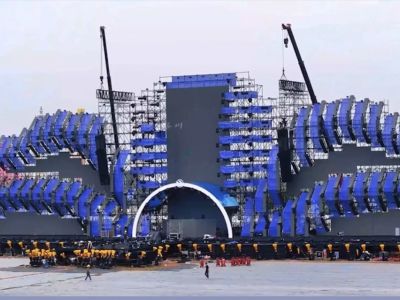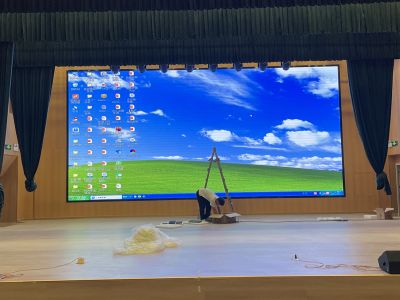
Outdoor glasses-free 3D large screen
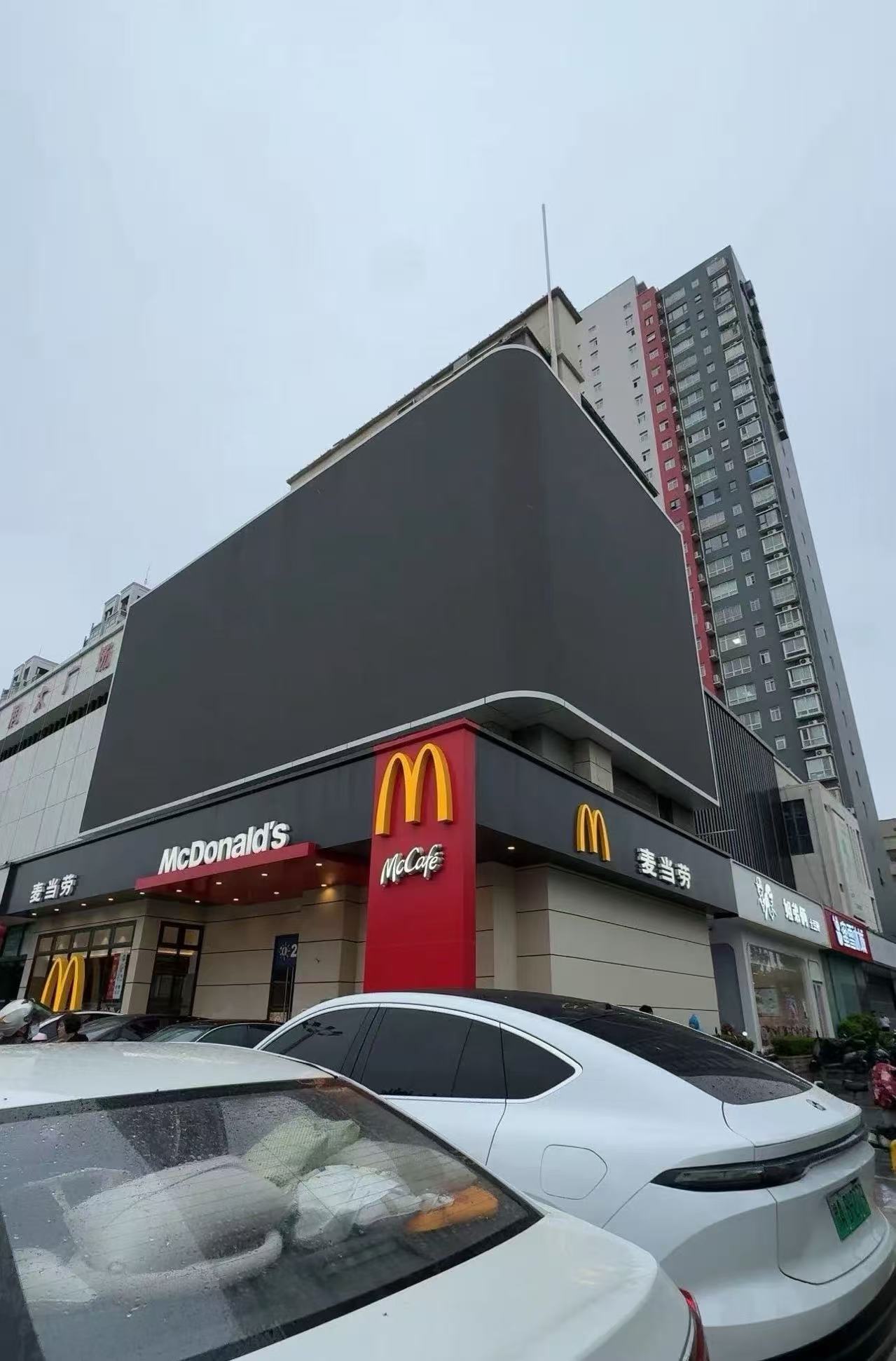
Outdoor LED Displays: The 'Digital Canvas' Reshaping
Urban Visual EcologyAs the first rays of morning sunlight
brush past office building facades, outdoor LED displays
already show the day's weather forecast; when night falls,
curved screens in commercial areas play immersive art
visuals, turning the streets into a moving gallery—today,
outdoor LED displays have long surpassed their single
function as 'advertising carriers' and have become core
digital infrastructure connecting urban functions and
activating public spaces.Their core competitiveness comes
from technology's ability to 'tame' extreme environments.
Unlike indoor screens, outdoor LED displays must
withstand four major challenges simultaneously: intense
sunlight, heavy rain, low temperatures, and dust.
High-brightness LEDs (commonly reaching above 5,000 nits)
can display clearly under noon sunlight, IP65 or higher
protection levels resist storms, and customized heat dissipation
structures ensure stable operation under temperature fluctuations
from -30°C to 60°C. This 'all-weather combat' ability allows them
to be rooted in every corner of the city—from giant screens
atop skyscrapers to community information screens on street
corners—seamlessly integrating into different scenarios.In terms
of applications, outdoor LED displays are advancing in both
'precision' and 'interactivity.' In the commercial sector, they are
no longer just one-way advertising tools but use AI facial
recognition to analyze crowd characteristics and push
personalized content in real time—for example, playing
parent-child activity videos in the children's clothing section,
or displaying food promotions near dining areas. In public
service, they transform into 'emergency information hubs,'
able to switch to warning notifications during disasters while
regularly showing bus arrival information or government
announcements. In the cultural realm, they deliver stunning
performances: the 3D naked-eye screen in Chengdu Taikoo
Li brings buildings to life, and the large screen-linked light
shows at Shanghai Bund turn the city nightscape into a perceivable
cultural symbol.Technological iteration continues to expand their
boundaries. The widespread adoption of Mini/Micro LED
technology brings display resolutions into the 'ultra-HD era,'
eliminating visible pixelation even at close distance; transparent
LED screens break the 'screen as barrier' limitation, allowing
installation on mall glass facades without obstructing light
while presenting transparent dynamic visuals; and flexible
screens enable displays to conform to curved buildings,
cylindrical pillars, and other irregular structures, turning
every corner of the city into a stage for display.From cold
electronic components to interactive media with warmth,
the evolution of outdoor LED displays essentially reflects
the deep integration of digital technology with urban life.
They not only illuminate cities day and night but also play
an increasingly important role in information transmission,
commercial empowerment, and cultural dissemination,
becoming an indispensable 'visual nerve ending' for future
smart cities.